marco@blog.luyckx.dev:~$ cat this-blog-changes-its-mind.md
This blog will change its mind
$ git log --follow this-blog-changes-its-mind.md 1 edition
First published.
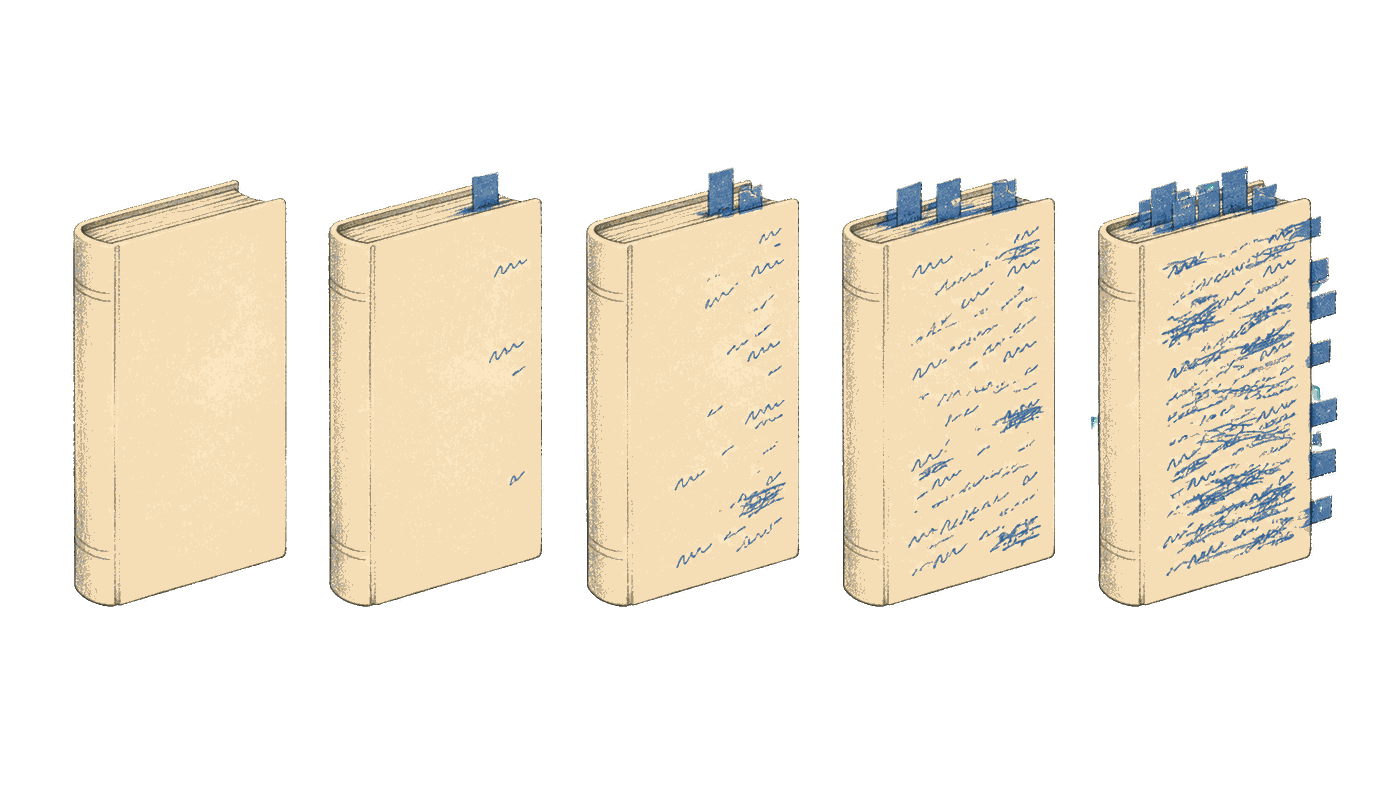
He rewrote under fire. Critics found the weak joints, and edition by edition he patched, conceded and hedged. The phrase everyone now attaches to him, survival of the fittest, is not in the first edition at all. He borrowed it from Herbert Spencer for the fifth, ten years in.
Historians mostly think the revisions made the book worse. He gave ground to critics who turned out to be wrong, and modern reprints usually go back to the first edition, the one before the concessions.
The obvious lesson is to get it right the first time and stand firm.
That is not the interesting part.
The interesting part is that the record exists. Six printed, dated editions mean anyone can watch one of the most consequential minds in science change in public: where it bent under pressure, where it should not have, where it quietly repaired a real mistake. Evolution has a fossil record. So, in those six editions, does Darwin’s thinking.
Essays on the web destroy that record by default. A post is edited silently or not at all. The text a reader finds is the latest text, and every save deletes the path that led to it.
The endpoint is the least informative point on the curve.
So this blog keeps its editions. One post a week, fifty-two a year: each one
something I learned, built, read, or stopped believing that week. When the
thinking in a post later changes, the post will not be silently rewritten. It will get a new
edition: the old text stays readable in full, a note says what changed and why,
and a word-level diff shows exactly where the mind moved. The machinery
announces itself as one quiet line above the post that reads like a git log,
because that is what it is.
Typos do not get editions. Beliefs do.
There is a selfish reason too. A post is a collection of things I believe on the day I write it. Memory revises itself quietly and calls the result consistency; the editions cannot. When my mind changes, I want the written proof of where it moved, and by how much.
Every post ends the same way, with the two sections sitting below this one: a curiosity that hooked me during the week, and a quote that earned its keep. They are the week’s residue, kept deliberately.
The first edition of the Origin was right about selection and wrong about inheritance. The sixth was better armoured and worse for it. Neither one is Darwin; Darwin is the line through all six.
A position is a point. Thinking is a curve. This blog publishes the curve.
Curiosity of the week
Quote of the week
“Do I contradict myself? Very well then I contradict myself, (I am large, I contain multitudes.)”
Walt Whitman, Song of Myself